Welcome to the official website of Renqiu Kaizheng Machinery Parts Factory

Typical application scenarios of gears
2025-11-26
automotive field
Transmission: Gear shifting is achieved through gear sets, such as in a dual clutch transmission (DCT) where the synchronizer meshes with the gears, reducing shifting time to less than 0.2 seconds.
Differential: The bevel gear distributes power to the left and right wheels, allowing them to rotate at different speeds and improving turning stability.
Starter: The worm gear mechanism converts the high-speed rotation of the motor into low-speed high torque, driving the engine to start.
aerospace
Engine transmission: High precision gears (with an accuracy of 3-4 levels) transmit turbine shaft power to ensure efficient engine operation. For example, a certain type of aircraft engine gearbox can withstand a torque of over 10000 N · m and has a lifespan of 15000 hours.
Flight control: The gear transmission mechanism connects the control surface with the hydraulic system to achieve precise control. For example, the aircraft rudder amplifies the pilot's operating force by more than 10 times through a gear set.
industrial machinery
Numerical Control Machine Tool: High precision gears (accuracy up to 5 levels) drive the spindle and worktable, ensuring machining accuracy of ± 0.001mm. For example, the gear transmission system in a five axis linkage machining center achieves complex surface machining.
Wind power generation: Large modulus gears (with a modulus of 10-15mm) transmit the wind energy captured by the blades to the generator, bearing enormous torque and bending moment. For example, a certain type of 5MW wind turbine gearbox weighs over 20 tons and transmits torque exceeding 500000N · m.
robot
Joint transmission: The flexible gears in the harmonic reducer mesh with the rigid wheels to achieve high-precision and large reduction ratio transmission (reduction ratio up to 30-160), ensuring flexible joint movement of the robot.
Servo system: The planetary gear reducer is combined with the servo motor to improve torque output and positioning accuracy (with a repeat positioning accuracy of ± 0.01mm).
Recent News
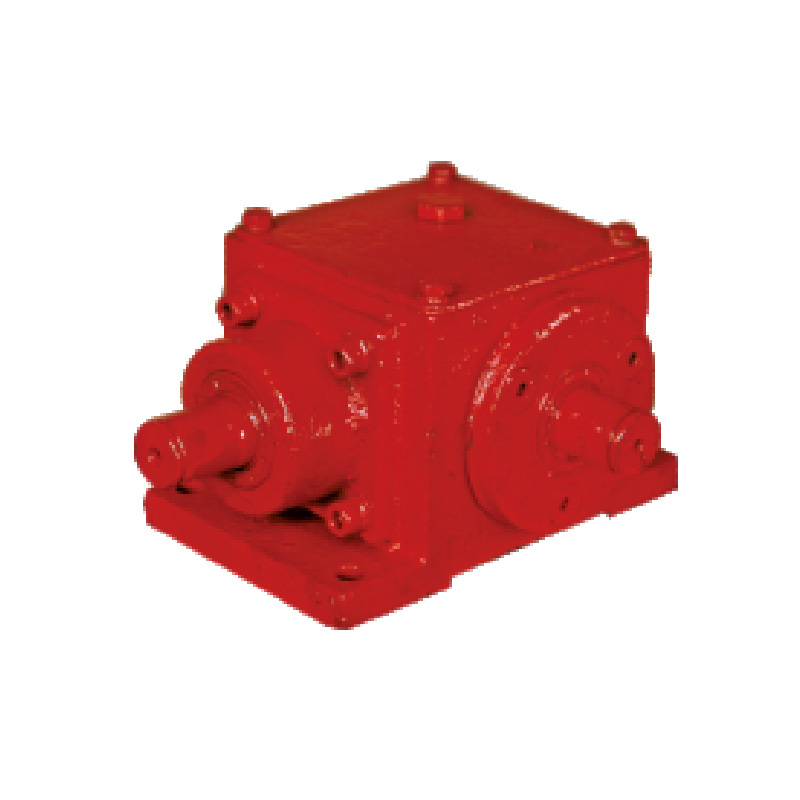
Understanding Gearboxes: The Heart of Industrial Motion